London stands as the undisputed football capital of England and one of the world’s great sporting cities. In the 2025/26 season, the city is represented by twelve fully professional clubs across the top four tiers of English football, plus several more in the semi-professional National League. From global giants to local underdogs, every corner of London lives and breathes football. Here’s a complete guide to each club’s history, achievements, and legends.
Premier League
Arsenal FC (Islington, Emirates Stadium)
Arsenal is one of the most successful clubs in English football, founded in 1886. The team plays at the state-of-the-art Emirates Stadium in Islington, with a capacity of over 60,000. Arsenal has won 13 league titles and a record 14 FA Cups. Club legends include Thierry Henry, Tony Adams, and Dennis Bergkamp. The “Invincibles” side of 2003/04 is a key part of English football history, going unbeaten all season. The club’s youth academy is renowned for developing stars such as Bukayo Saka and Emile Smith Rowe.
Brentford FC (Brentford, Gtech Community Stadium)
Once seen as a small local club, Brentford has cemented its place in the Premier League since 2021/22, playing at the modern Gtech Community Stadium (about 17,250 seats) in West London. Brentford is known for its “Moneyball” approach and data-driven recruitment. The club’s greatest recent success has been survival in the Premier League and challenging more established teams. Notable players include Ivan Toney and historic top scorer Jim Towers. Brentford’s family atmosphere is loved by fans, and their rise is one of the best recent football stories in England.
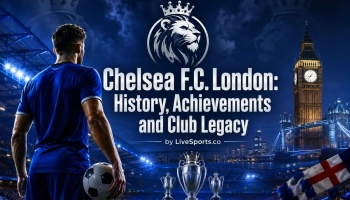
Chelsea FC (Fulham, Stamford Bridge)
Chelsea, founded in 1905, has become a global football powerhouse based in Fulham, West London. The team plays at Stamford Bridge (capacity: 40,000) and is famous for its blue colors. The Blues have won six Premier League titles, two UEFA Champions League trophies (2012, 2021), and multiple domestic cups. Legendary players include Frank Lampard, Didier Drogba, and John Terry. Chelsea is also celebrated for its strong academy, producing the likes of Mason Mount and Reece James. The club’s success in the 21st century reflects London’s transformation into a global football hub.
Crystal Palace FC (Selhurst, Selhurst Park)
Crystal Palace is one of South London’s best-supported clubs, playing at the atmospheric Selhurst Park (25,000 capacity). Founded in 1905, Palace’s best achievements include FA Cup finals in 1990 and 2016. Club legends feature Wilfried Zaha, Mark Bright, and Geoff Thomas. The club is famous for its passionate fan base and vibrant matchday displays. Young talents such as Aaron Wan-Bissaka and Victor Moses began their careers here. Crystal Palace is known for its attacking style and deep ties to the local community.
Fulham FC (Fulham, Craven Cottage)
Founded in 1879, Fulham is the oldest London club in the Premier League, playing home matches at the charming Craven Cottage (about 22,000) beside the Thames. Their most memorable achievement is reaching the 2010 UEFA Europa League final. Legends include Johnny Haynes and Clint Dempsey, while Ryan Sessegnon is a notable academy graduate. The club is loved for its traditional white shirts and intimate, riverside ground. Fulham is seen as one of the most family-friendly clubs in England.
Tottenham Hotspur FC (Tottenham, Tottenham Hotspur Stadium)
Founded in 1882, Tottenham plays at the ultra-modern Tottenham Hotspur Stadium (over 62,000 capacity) in North London. Spurs have won two English league titles, eight FA Cups, and two UEFA Cups (now Europa League). Legendary figures include Jimmy Greaves, Glenn Hoddle, Gary Lineker, Gareth Bale, and homegrown icon Harry Kane. Tottenham’s attacking football and passionate fan base are hallmarks of the club. Their North London rivalry with Arsenal is among the fiercest in football.
West Ham United FC (Stratford, London Stadium)
Founded in 1895, West Ham United plays at London Stadium (over 60,000 seats) in East London’s Stratford district. The club has won three FA Cups, the 1965 Cup Winners’ Cup, and most recently the 2023 UEFA Europa Conference League. West Ham is famous for producing England stars such as Bobby Moore and Geoff Hurst. Club legends include Trevor Brooking and Mark Noble. Their proud academy is nicknamed “The Academy of Football.” The Hammers symbolize East London’s resilience and working-class spirit.
Championship
Queens Park Rangers (Shepherd’s Bush, Loftus Road)
Founded in 1886, QPR is based in Shepherd’s Bush, West London, playing at Loftus Road (18,000 seats). The club’s best league finish was as runners-up in 1976, and they won the League Cup in 1967. Famous for their blue-and-white hoops and unique “hipster” vibe, QPR legends include Stan Bowles, Rodney Marsh, and Les Ferdinand. The club produced top talent like Raheem Sterling in his youth. Rivalries with Chelsea and Fulham are fiercely contested.
Millwall FC (Bermondsey, The Den)
Millwall, founded in 1885, is a tough, working-class club from Bermondsey, South East London, playing at The Den (20,000 capacity). Their most significant achievement was reaching the 2004 FA Cup final. Notable names include Teddy Sheringham, Tim Cahill, and Neil Harris. Millwall is renowned for its raucous, loyal fan base and the chant “No one likes us, we don’t care.” The club’s identity is rooted in hard work, resilience, and strong local ties.
Charlton Athletic (Greenwich, The Valley)
Charlton Athletic was founded in 1905 and plays at The Valley (27,000 seats) in Greenwich, South East London. Their greatest triumph was winning the FA Cup in 1947. The club spent several years in the Premier League in the early 2000s. Notable former players include Derek Hales, Clive Mendonca, and Joe Gomez (now at Liverpool). Charlton is admired for its commitment to youth development and community engagement. The club is also known for overcoming financial adversity.
League One
Leyton Orient FC (Leyton, Brisbane Road)
Leyton Orient, established in 1881, plays at Brisbane Road (9,000 capacity) in East London. The club’s highest achievement is competing in the second tier and winning promotion from lower divisions. Key club figures include Tommy Johnston, Dean Cox, and Jobi McAnuff. Leyton Orient is known for its family-friendly atmosphere and strong community roots. The club is celebrated for rebounding from tough times. Many young players have launched their careers here.
AFC Wimbledon (Merton, Plough Lane)
AFC Wimbledon is a fan-owned club formed in 2002 after the original Wimbledon FC controversially relocated to Milton Keynes. They play at Plough Lane (9,300 seats) in South West London. The club’s story is one of English football’s greatest fairy tales, rising from non-league to the EFL with five promotions in nine seasons. Their biggest triumph is survival and growth as a fan-led institution. Legendary figures include Dave Beasant (FA Cup-winning keeper in 1988). The club is defined by resilience, loyalty, and supporter empowerment.
League Two
Barnet FC (Canons Park, The Hive)
Founded in 1888, Barnet plays at The Hive Stadium (6,500 capacity) in Canons Park, North London. The club has spent most of its history in the lower divisions but regularly contends for promotion. Club heroes include Dougie Freedman and Giuliano Grazioli. Barnet is known for its youth development and close community connections. Their orange and black kit is a familiar sight in North London. The club’s rivalry with local sides is a highlight of each season.
Bromley FC (Bromley, Hayes Lane)
Bromley FC, founded in 1892, achieved historic promotion to League Two in 2024. The club’s home, Hayes Lane (5,000 seats), is located in South London. Bromley won the FA Trophy in 2022 and is famous for its consistent progression despite limited resources. Club legends include Alan Campbell and George Brown. Bromley boasts a growing youth academy and a vibrant local following. Their story embodies ambition and perseverance.
National League / Conference
Wealdstone FC (Ruislip, Grosvenor Vale)
Founded in 1899, Wealdstone plays in the National League at Grosvenor Vale (4,000 seats) in Ruislip, North West London. The club’s greatest achievement was winning both the FA Trophy and the Conference National in the 1980s. England international Stuart Pearce began his career at Wealdstone. The club is renowned for its friendly atmosphere and passionate “Wealdstone Raider” fans. Wealdstone develops young talent and embodies non-league football’s community spirit.
Dagenham & Redbridge (Dagenham, Victoria Road)
Dagenham & Redbridge, formed in 1992 through a merger, play at Victoria Road (about 6,000 capacity) in East London. Their biggest achievement is winning promotion to League Two in 2007, with several seasons spent in the Football League. Notable players include Paul Benson and Scott Doe. The club is known for strong local support and its role in developing lower-league talent. Dagenham’s red and blue colors are a familiar sight in East London. Their matches are an essential part of the local football calendar.
Conclusion
London is truly a unique football city, with every neighborhood boasting its own club, identity, and passionate fans. Local rivalries, historic achievements, and footballing cultures make London the heartbeat of English football. Whether you support Chelsea’s superstars, Arsenal’s tradition, or the underdog stories of Wimbledon and Bromley, the city has something for every football lover. In London, football is more than just a game – it’s a way of life.
![EA Sports FC 27 Reveal Trailer [VIDEO]](https://livesports.co/wp-content/uploads/thumbs_dir/EA-Sports-FC-27-Reveal-Trailer-252pchs9f7le3xsgpl3xgfdn2tp6xdip3jwniy9yjiqs.webp)