🤾 Ranking the Best Men’s Professional Handball Leagues Worldwide
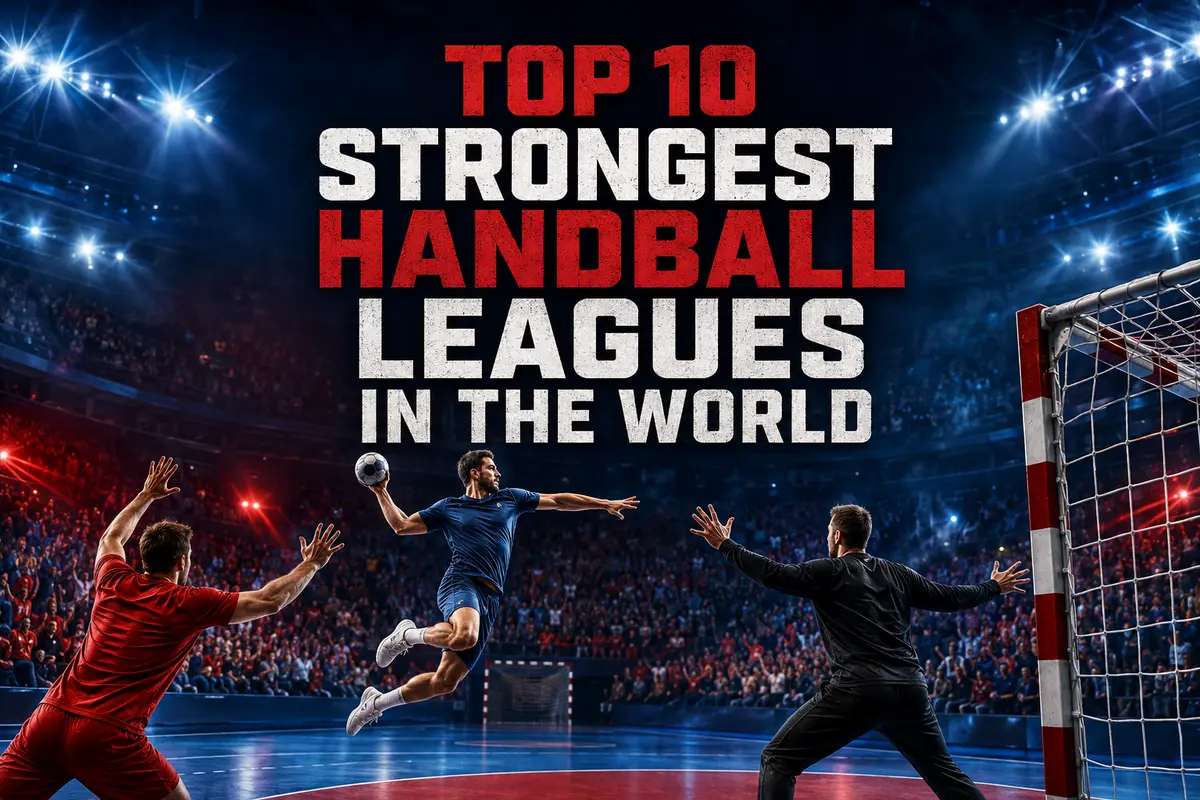
Professional handball reaches its highest club level in Europe, where domestic competitions attract Olympic champions, world champions and leading international players. Germany and France combine financial power with exceptional depth, while Denmark, Hungary and Spain remain influential centres of the sport. This ranking presents the ten strongest men’s handball leagues in the world.
🌍 What Determines the Strength of a Handball League?
The ranking considers squad quality, competitive depth, financial resources and results achieved in European club competitions. Attendance, broadcasting coverage, coaching standards and youth development are also important. International recruitment reveals how attractive each league is to elite professionals. Since no official worldwide ranking exists, the precise order remains open to debate.
1. 🇩🇪 Handball-Bundesliga – Germany
Germany’s Handball-Bundesliga is widely regarded as the strongest men’s handball league in the world. It combines elite German internationals with leading players from Denmark, Sweden, France, Spain and numerous other countries. Its demanding schedule offers few easy matches, even for clubs competing for the national championship.
SC Magdeburg, Füchse Berlin, THW Kiel and SG Flensburg-Handewitt regularly assemble squads capable of winning major European trophies. Large crowds, modern arenas and extensive television coverage strengthen the league commercially. German clubs have also dominated the EHF European League and consistently challenged for the Champions League title.
2. 🇫🇷 Daikin StarLigue – France
France’s Daikin StarLigue combines substantial financial resources with outstanding athleticism and tactical variety. French clubs recruit established internationals while continuing to develop players through one of Europe’s most productive academy systems. The competition has become deeper and more unpredictable as ambitious teams challenge its traditional leaders.
Paris Saint-Germain Handball, HBC Nantes and Montpellier Handball regularly build squads suitable for the EHF Champions League. Toulouse, Limoges, Chambéry and Saint-Raphaël further strengthen the domestic competition. Professional organization, improving arenas and international recruitment keep France close to Germany in the global hierarchy.
3. 🇩🇰 Herreligaen – Denmark
Denmark’s Herreligaen benefits from one of the world’s most successful handball cultures and an exceptional player-development system. Danish clubs emphasize speed, movement, intelligent passing and tactical flexibility from an early age. The league regularly produces players who later become stars in Germany, France and the Champions League.
Aalborg Håndbold has developed into a major European force, while GOG, Skjern Håndbold and Bjerringbro-Silkeborg maintain high domestic standards. Budgets are generally smaller than those of the richest German or French clubs. However, excellent coaching, competitive balance and a constant supply of talent make the Danish league exceptionally strong.
4. 🇭🇺 Nemzeti Bajnokság I – Hungary
Hungary’s leading division is built around powerful clubs, passionate supporters and a long tradition of international handball. Its strongest teams can offer competitive salaries to Olympic medalists, world champions and established internationals. Matches between the leading Hungarian clubs regularly resemble encounters from the later rounds of the Champions League.
Veszprém HC and OTP Bank-PICK Szeged form one of the most intense rivalries in European club handball. Veszprém has repeatedly challenged for the continent’s biggest trophies, while Szeged maintains an internationally competitive squad. The gap to smaller teams affects overall balance, but the league’s highest level is unquestionably elite.
5. 🇪🇸 Liga ASOBAL – Spain
Spain’s Liga ASOBAL remains one of the most technically influential handball competitions despite losing some of its former financial strength. Spanish clubs are renowned for intelligent positional play, creative coaching and the development of tactically versatile players. Many successful coaches working abroad were shaped by the Spanish handball system.
Barça is the league’s dominant force and one of the most successful handball clubs in history. Bidasoa Irún, Fraikin Granollers and Ademar León provide important domestic opposition while developing players for international careers. Limited financial balance weakens the title race, but Spain’s technical quality and European achievements justify a high position.
6. 🇵🇱 ORLEN Superliga – Poland
Poland’s ORLEN Superliga combines physical handball, intense rivalries and some of the most passionate supporters in the sport. Its leading clubs recruit prominent foreign players alongside the strongest Polish internationals. Matches are often defined by aggressive defending, powerful backcourt shooting and emotionally charged atmospheres inside crowded arenas.
Industria Kielce has won the Champions League and remained a regular contender for Europe’s most prestigious trophy. ORLEN Wisła Płock has developed into a genuine domestic rival and an increasingly dangerous European opponent. Financial differences between clubs remain considerable, but the league’s leading encounters consistently deliver world-class handball.
7. 🇵🇹 Campeonato Placard Andebol 1 – Portugal
Portugal’s top division has improved rapidly through better academies, ambitious investment and increasingly sophisticated coaching. Portuguese clubs now retain more domestic talent while attracting valuable players from Brazil, Spain, Cape Verde and other markets. Their recent performances in European competitions demonstrate the league’s substantial sporting progress.
Sporting CP, FC Porto and Benfica form a powerful leading group capable of competing beyond Portugal. Sporting has developed into a serious Champions League force, while Porto and Benfica possess strong international experience. The difference between the largest and smallest clubs remains visible, but the championship’s elite level continues to rise.
8. 🇳🇴 REMA 1000-ligaen – Norway
Norway’s REMA 1000-ligaen plays an important role in developing fast, technically accomplished and tactically intelligent handball players. Its clubs provide young athletes with meaningful senior opportunities before many move to wealthier competitions abroad. Strong coaching and the country’s broader sporting culture help compensate for relatively modest commercial resources.
Elverum Håndball has provided consistent international visibility through repeated appearances in European competitions. Kolstad Håndball raised the league’s profile by recruiting prominent Norwegian stars and pursuing ambitious Champions League objectives. Although the domestic market is limited, Norway’s development pathway and playing quality secure its place in the top ten.
9. 🇷🇴 Liga Națională – Romania
Romania’s Liga Națională has regained international relevance through renewed investment, ambitious clubs and experienced foreign professionals. The competition is known for physical defending, emotional home support and demanding away fixtures. Several organizations have improved their squads and facilities in an effort to compete more effectively in European tournaments.
Dinamo București is the league’s dominant international representative and has assembled squads designed for success in the Champions League. Minaur Baia Mare, Potaissa Turda and other established clubs contribute to the domestic competition. Uneven budgets reduce overall balance, but Romania’s leading teams can perform at an impressive European level.
10. 🇸🇪 Handbollsligan – Sweden
Sweden’s Handbollsligan completes the ranking because it operates within one of the world’s most respected handball traditions. Swedish clubs emphasize tactical discipline, intelligent movement and the long-term development of young players. The league continually produces athletes who progress into stronger foreign competitions and the successful Swedish national team.
IFK Kristianstad, IK Sävehof, Ystads IF and Alingsås HK rank among the country’s most recognizable organizations. Swedish teams generally work with smaller budgets than clubs in Germany, France or Hungary. Nevertheless, excellent coaching, productive academies and competitive domestic matches preserve the league’s high sporting standard.
Germany’s Handball-Bundesliga remains the global benchmark because no other competition combines so many elite clubs, international stars and demanding weekly fixtures. France, Denmark and Hungary provide powerful alternatives, while Spain, Poland and Portugal retain considerable continental influence. Together, these leagues demonstrate why European club handball represents the highest professional level of the sport.