🎮 Dota 2 Esports Explained: Gameplay, Tournament Rules and the Best Professional Teams
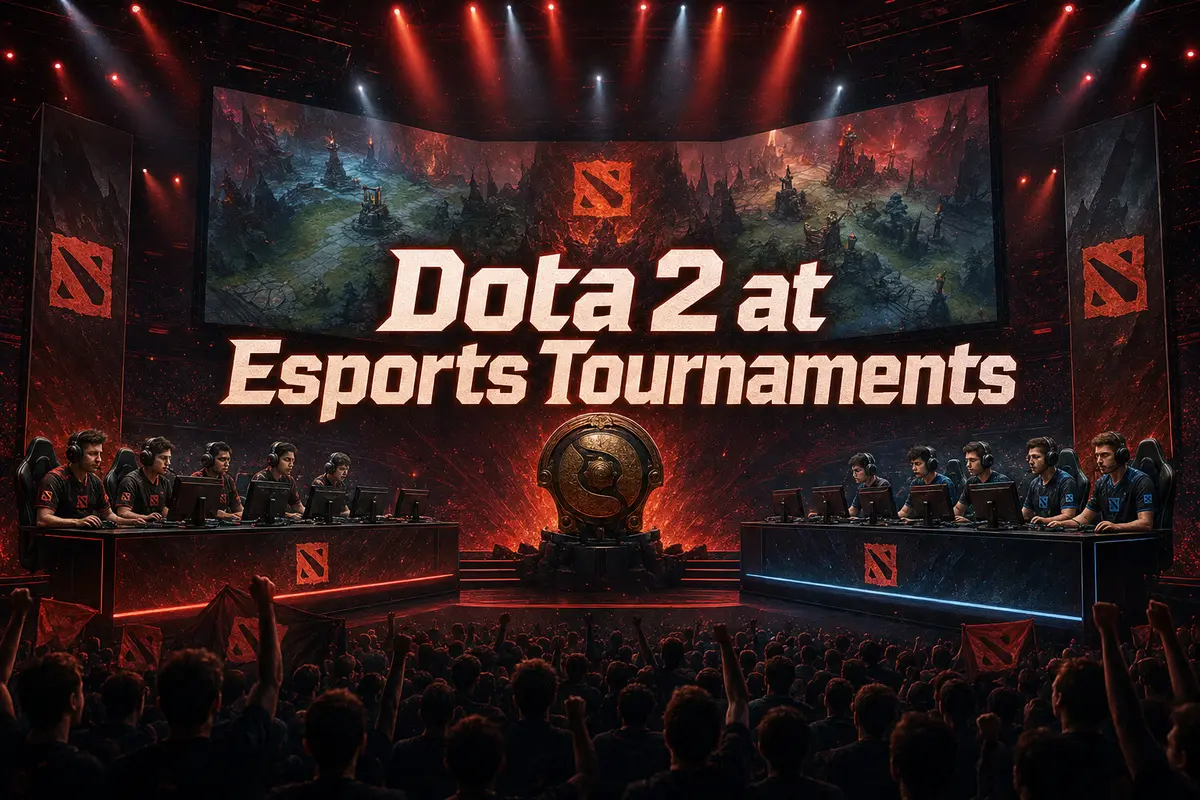
Dota 2 is one of the most complex, competitive and internationally recognized games in esports. Professional tournaments combine strategic drafting, mechanical skill, teamwork and rapid decision-making, often attracting millions of online viewers. From regional qualifiers to The International, Dota 2 offers a demanding competitive environment in which one successful team fight can transform an entire match.
🏆 How Professional Dota 2 Tournaments Work
Dota 2 competitions are contested by teams of five players, with each participant controlling a unique hero and performing a particular tactical role. Tournaments normally combine a group or Swiss stage with elimination playoffs, while individual series are most commonly played in best-of-three or best-of-five formats.
Teams must also follow detailed regulations covering hero selection, technical pauses, substitutions, competitive integrity and communication with tournament officials. The International remains Dota 2’s flagship championship, although ESL Pro Tour, BLAST Slam, PGL Wallachia and the Esports World Cup are also important parts of the professional calendar.
⚔️ What Is Dota 2 and How Is the Game Played?
Dota 2 is a free-to-play multiplayer online battle arena developed by Valve and based on the original Defense of the Ancients modification. Two teams, Radiant and Dire, fight on opposite sides of an asymmetrical map. The main objective is to destroy the enemy Ancient located inside its fortified base.
Every player selects one hero with distinctive abilities, attributes and possible item combinations. Heroes earn experience by fighting and collect gold by killing creeps, opponents or structures. Unlike many competitive games, a Dota 2 match has no fixed duration and continues until one Ancient is destroyed.
🗺️ Heroes, Lanes and Tactical Roles in Dota 2
The battlefield contains three main lanes, two jungles, neutral camps, runes and powerful objectives such as Roshan. Defensive towers protect the routes leading toward each base. Teams must balance farming, vision, map control and aggression while responding to constantly changing threats across the battlefield.
A conventional lineup includes three core players and two supports, although professional strategies may alter their responsibilities. The carry usually becomes strongest late in the game, the midlaner controls tempo and the offlaner creates space. Supports provide vision, initiate fights and protect valuable teammates.
📜 Tournament Rules, Drafting and Match Formats
Before a professional match begins, captains enter a drafting phase in which heroes are alternately banned and selected. A team cannot choose a hero already taken by its opponent, so captains must anticipate rival tactics. Draft order and side selection are commonly decided by seeding, a coin toss or tournament rules.
Group-stage matches may use best-of-one, best-of-two or best-of-three formats, while playoffs are usually played as Bo3 series. Grand finals are frequently Bo5, requiring three game victories. Depending on the event, playoffs can follow single-elimination, double-elimination or gauntlet structures with upper and lower brackets.
🖥️ Pauses, Substitutions and Competitive Integrity
Players may pause a game because of genuine technical problems, but they must notify officials and cannot use the interruption to gain an unfair advantage. Referees supervise reconnects, server failures and equipment issues. Excessive delays, unauthorized communication or deliberate disconnection can result in penalties.
Professional competitors must play on approved accounts and follow rules covering conduct, sponsorships, match fixing and prohibited software. Coaches are generally restricted from communicating with players during active games. Substitutes usually require advance registration or explicit approval from the tournament organizer.
🌍 The Best Dota 2 Teams and Major Championships
OG and Team Spirit hold a special position in Dota 2 history because each organization won The International twice. Team Liquid, Tundra Esports, Team Falcons and Natus Vincere have also lifted the Aegis of Champions. Other historically influential names include Evil Geniuses, Team Secret and China’s PSG.LGD.
The balance of power changes quickly when rosters, patches and competitive strategies evolve. Team Falcons won The International 2025, while PVISION defeated BetBoom Team to capture the Dota 2 title at the 2026 Esports World Cup. Team Spirit, Team Liquid, Team Yandex and leading Chinese teams also remain major threats.
Dota 2 esports combines an enormous strategic depth with spectacular team fights and a professional scene spanning several continents.
Understanding hero roles, drafting, tournament formats and official rules makes professional matches much easier and more rewarding to follow.
Although famous organizations build long-term legacies, frequent updates and roster changes ensure that no Dota 2 team can remain dominant without continually adapting.



![EA Sports FC 27 Reveal Trailer [VIDEO]](https://livesports.co/wp-content/uploads/thumbs_dir/EA-Sports-FC-27-Reveal-Trailer-252pchs9f7le3xsgpl3xgfdn2tp6xdip3jwniy9yjiqs.webp)