Glasgow Rangers: The Legacy of a Scottish Football Giant

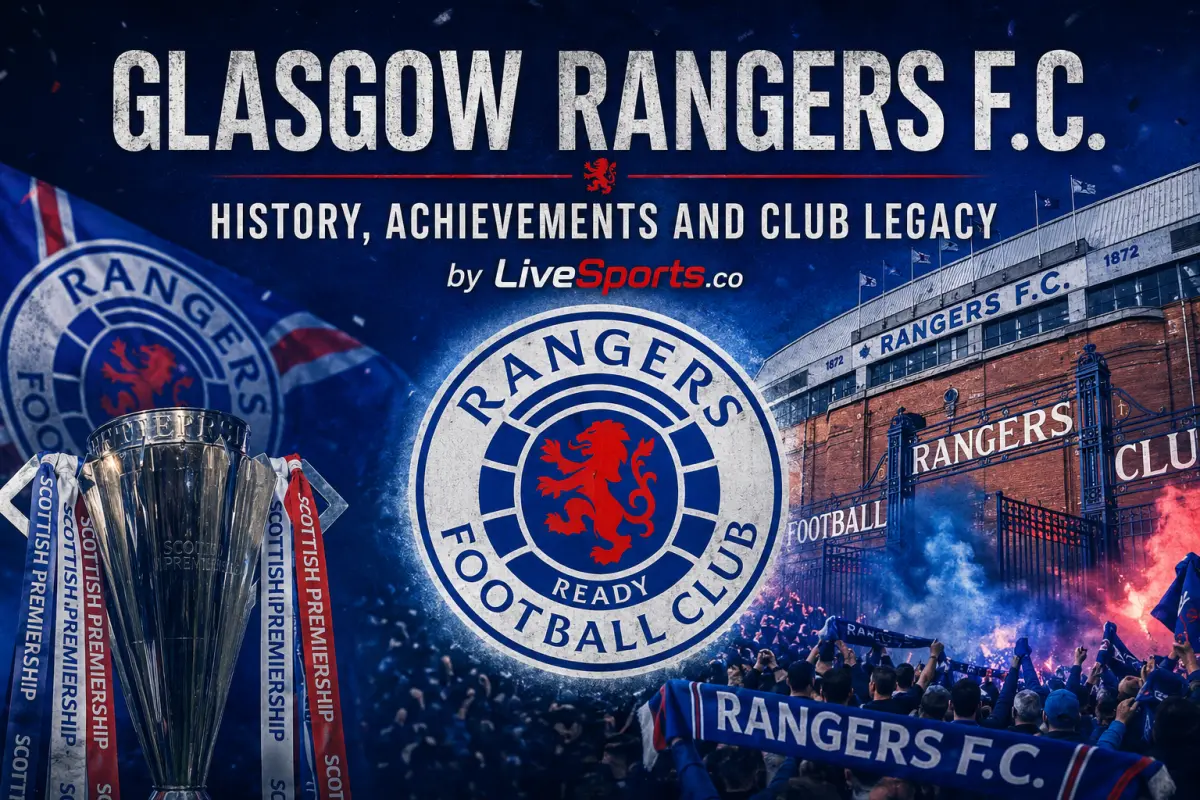
🔵 Glasgow Rangers: History, Trophies, Ibrox Stadium
Rangers Football Club is one of the most successful and historically significant football clubs in the world, with a tradition stretching back to the nineteenth century. Famous for its enormous trophy collection, passionate supporters, iconic Ibrox Stadium and intense rivalry with Celtic, the Glasgow club has played a central role in the development of Scottish football. From its early matches on public grounds to memorable European campaigns, Rangers has become an institution whose influence reaches far beyond Scotland.
⚽ Rangers – A Giant of Scottish and European Football
Founded in 1872, Rangers has developed into one of the defining clubs of British football. The team has won more than fifty Scottish league championships, dozens of domestic cups and a major European trophy, while representing Scotland in international competitions across many generations. The club combines sporting tradition, a distinctive identity and worldwide support, making every season at Ibrox another chapter in one of football’s longest and most successful histories.
📜 History and Foundation
 Rangers Football Club was founded in Glasgow in March 1872 by brothers Moses and Peter McNeil, together with Peter Campbell and William McBeath. According to club tradition, the founders discussed creating a football team after meeting at Glasgow Green. Rangers played its first recorded match later that year against Callander, with the game ending in a goalless draw. The club initially played without a permanent home before gradually establishing itself as one of the strongest teams in Scotland.
Rangers was one of the eleven original members of the Scottish Football League when the competition was formed in 1890. The club shared the inaugural league championship with Dumbarton after the teams finished level on points and drew a deciding match. Rangers soon entered its first great period of dominance, winning four consecutive league titles between 1899 and 1902. The unbeaten 1898–99 campaign was particularly remarkable, as the team won all eighteen of its league matches.
During the first half of the twentieth century, Rangers became the dominant force in Scottish football under legendary manager Bill Struth. Appointed in 1920, Struth remained in charge for more than three decades and led the club to numerous league championships and domestic cups. His demanding standards, discipline and emphasis on professionalism helped create the winning culture that became closely associated with Rangers.
One of the greatest achievements of this era came in the 1948–49 season, when Rangers became the first Scottish club to win the domestic treble of the league championship, Scottish Cup and League Cup. The club continued to collect trophies throughout the following decades and established itself as a regular participant in European competitions after their introduction during the 1950s.
Rangers experienced one of the darkest moments in its history during the Ibrox Disaster on 2 January 1971. A crush on a stadium stairway after an Old Firm match resulted in the deaths of 66 supporters and injuries to more than 200 people. The tragedy led to a major redevelopment of Ibrox Stadium and became a permanent part of the club’s collective memory.
Only sixteen months after the disaster, Rangers achieved its greatest European triumph by defeating Dynamo Moscow in the 1972 European Cup Winners’ Cup final in Barcelona. The victory provided an emotional moment for the club and its supporters and remains the only major UEFA trophy won by Rangers.
Further periods of dominance followed during the late 1980s and 1990s. Under managers Graeme Souness and Walter Smith, Rangers won nine consecutive Scottish league championships between 1988–89 and 1996–97, equalling the national record. The team also came close to reaching the inaugural UEFA Champions League final during the 1992–93 season, remaining unbeaten throughout its European campaign.
The club entered a severe financial crisis in 2012 and the company operating Rangers entered liquidation. A new corporate entity acquired the club’s assets, and Rangers was admitted to the fourth tier of Scottish football. The team subsequently won promotions through the lower divisions and returned to the Scottish Premiership in 2016.
Under Steven Gerrard, Rangers completed an undefeated league campaign in 2020–21 and won its 55th Scottish championship, preventing Celtic from securing a tenth consecutive title. One year later, Rangers reached the 2022 UEFA Europa League final, defeating several major European opponents before losing to Eintracht Frankfurt in a penalty shootout in Seville.
🏆 Major Achievements
Rangers is one of the most decorated football clubs in the world and has won every major domestic competition available in Scottish football. The club has collected 55 top-flight league championships, more than thirty Scottish Cups and a record number of Scottish League Cups. Rangers has also completed the traditional Scottish domestic treble on seven occasions, demonstrating its ability to dominate an entire season across multiple competitions.
🏆 Rangers Domestic Honours by Season
Rangers has built its reputation through more than a century of success in Scottish football, winning championships and domestic cups across numerous generations.
| Competition | Titles | Winning Seasons / Years |
|---|---|---|
| Scottish League Championship | 55 | 1890–91 (shared), 1898–99, 1899–1900, 1900–01, 1901–02, 1910–11, 1911–12, 1912–13, 1917–18, 1919–20, 1920–21, 1922–23, 1923–24, 1924–25, 1926–27, 1927–28, 1928–29, 1929–30, 1930–31, 1932–33, 1933–34, 1934–35, 1936–37, 1938–39, 1946–47, 1948–49, 1949–50, 1952–53, 1955–56, 1956–57, 1958–59, 1960–61, 1962–63, 1963–64, 1974–75, 1975–76, 1977–78, 1986–87, 1988–89, 1989–90, 1990–91, 1991–92, 1992–93, 1993–94, 1994–95, 1995–96, 1996–97, 1998–99, 1999–2000, 2002–03, 2004–05, 2008–09, 2009–10, 2010–11, 2020–21 |
| Scottish Cup | 34 | 1893–94, 1896–97, 1897–98, 1902–03, 1927–28, 1929–30, 1931–32, 1933–34, 1934–35, 1935–36, 1947–48, 1948–49, 1949–50, 1952–53, 1959–60, 1961–62, 1962–63, 1963–64, 1965–66, 1972–73, 1975–76, 1977–78, 1978–79, 1980–81, 1991–92, 1992–93, 1995–96, 1998–99, 1999–2000, 2001–02, 2002–03, 2007–08, 2008–09, 2021–22 |
| Scottish League Cup | 28 | 1946–47, 1948–49, 1960–61, 1961–62, 1963–64, 1964–65, 1970–71, 1975–76, 1977–78, 1978–79, 1981–82, 1983–84, 1984–85, 1986–87, 1987–88, 1988–89, 1990–91, 1992–93, 1993–94, 1996–97, 1998–99, 2001–02, 2002–03, 2004–05, 2007–08, 2009–10, 2010–11, 2023–24 |
| Scottish Championship | 1 | 2015–16 |
| Scottish League One | 1 | 2013–14 |
| Scottish Third Division / League Two | 1 | 2012–13 |
| Scottish Challenge Cup | 1 | 2015–16 |
| Domestic Treble | 7 | 1948–49, 1963–64, 1975–76, 1977–78, 1992–93, 1998–99, 2002–03 |
| Nine Consecutive League Championships | 1 | 1988–89 to 1996–97 |
| Unbeaten Top-Flight League Season | 2 | 1898–99, 2020–21 |
Internationally, Rangers has appeared in several major European finals and became the first British club to reach a UEFA competition final when it contested the 1961 European Cup Winners’ Cup. The team returned to the final of the same competition in 1967 before finally lifting the trophy in Barcelona in 1972.
Rangers later reached the UEFA Cup final in 2008 after defeating opponents including Werder Bremen, Sporting CP and Fiorentina. Approximately 100,000 Rangers supporters travelled to Manchester for the final, although the team was defeated 2–0 by Zenit Saint Petersburg. Fourteen years later, Rangers completed another remarkable European run and reached the 2022 UEFA Europa League final in Seville, losing to Eintracht Frankfurt following a penalty shootout.
🌍 Rangers International Honours and European Finals
Rangers has represented Scottish football in some of Europe’s biggest matches, winning the Cup Winners’ Cup and reaching four additional UEFA competition finals.
| Competition | Titles / Final Appearances | Seasons / Years |
|---|---|---|
| European Cup Winners’ Cup | 1 title | 1971–72 |
| European Cup Winners’ Cup Runners-up | 2 | 1960–61, 1966–67 |
| UEFA Cup / UEFA Europa League Runners-up | 2 | 2007–08, 2021–22 |
| UEFA Champions League Semi-final Stage* | 1 | 1992–93 |
| Major UEFA Finals Reached | 5 | 1960–61, 1966–67, 1971–72, 2007–08, 2021–22 |
*The 1992–93 Champions League used two group stages. Rangers finished second in the group whose winner advanced directly to the final, making the campaign equivalent to reaching the competition’s final four.
🏟️ Stadium and Club Identity
Rangers plays its home matches at Ibrox Stadium, one of the oldest and most iconic football venues in the world. Located on the south side of Glasgow, Ibrox first opened in 1899 and has undergone several major redevelopments throughout its history. Following the tragic Ibrox Disaster in 1971, the stadium was transformed into one of Europe’s first modern all-seater arenas. Today, it accommodates more than 50,000 spectators and is consistently among the best-attended football stadiums in the United Kingdom.
The club’s traditional colors are royal blue shirts, white shorts and black or blue socks. Rangers’ famous crest has evolved over the decades, while the intertwined RFC monogram remains one of the most recognizable symbols in British football. The club’s anthem “Follow Follow,” the sea of blue scarves inside Ibrox and generations of football traditions have created one of the strongest sporting identities anywhere in Europe.
🌟 Club Legends and Rivalries
Throughout its history, Rangers has been represented by many of the greatest players and managers in Scottish football. Legends such as John Greig, Ally McCoist, Sandy Jardine, Davie Cooper, Brian Laudrup, Richard Gough, Jim Baxter and goalkeeper Andy Goram became symbols of different successful eras. On the touchline, Bill Struth, Walter Smith, Graeme Souness and Steven Gerrard each played important roles in shaping modern Rangers history, while Struth remains the club’s most successful manager after leading Rangers to an extraordinary collection of domestic trophies.
⭐ Rangers’ 10 Greatest Players of All Time
The following legends helped define Rangers through exceptional performances, leadership, loyalty and unforgettable moments across more than a century of football history.
| # | Player | Years | Short Description |
|---|---|---|---|
| 1 | John Greig | 1961–1978 | The club’s greatest captain, leading Rangers through one of its most successful periods and lifting the 1972 European Cup Winners’ Cup. |
| 2 | Ally McCoist | 1983–1998 | Rangers’ all-time leading goalscorer and a central figure during the famous nine-in-a-row era. |
| 3 | Jim Baxter | 1960–1965, 1969–1970 | Elegant midfield genius regarded as one of Scotland’s greatest footballers. |
| 4 | Sandy Jardine | 1967–1982 | Versatile defender who made over 650 appearances and won numerous domestic honours. |
| 5 | Brian Laudrup | 1994–1998 | Danish superstar whose creativity and skill helped Rangers dominate Scottish football. |
| 6 | Davie Cooper | 1977–1989 | Gifted winger famous for outstanding crossing ability and technical brilliance. |
| 7 | Richard Gough | 1987–1997 | Inspirational captain who led Rangers throughout much of the nine consecutive league titles. |
| 8 | Andy Goram | 1991–1998 | Legendary goalkeeper renowned for spectacular saves in domestic and European competition. |
| 9 | Derek Johnstone | 1970–1983 | Powerful striker and defender who became one of Rangers’ most versatile club legends. |
| 10 | Barry Ferguson | 1997–2003, 2005–2009 | Midfield leader whose passing and determination made him one of the club’s greatest modern captains. |
Rangers’ fiercest rivalry is with Celtic in the world-famous Old Firm derby, one of football’s oldest and most intense rivalries. Dating back to the nineteenth century, the fixture extends far beyond sport and has become deeply connected with Glasgow’s social, religious and cultural history. Every meeting attracts enormous global attention and regularly ranks among the most watched domestic football matches anywhere in the world.
Historic rivalries with Aberdeen and Heart of Midlothian have also produced memorable encounters, while European nights at Ibrox have helped strengthen Rangers’ reputation as one of Britain’s great football clubs. Matches against English opposition have often carried additional significance due to the historic relationship between Scottish and English football.
❤️ Fans and Legacy
Rangers enjoys one of the largest and most passionate fan bases in world football. Supporters fill Ibrox throughout the season while official supporters’ clubs operate across Europe, North America, Australia, Asia and many other parts of the world. The club’s loyal following has remained remarkably strong through both periods of great success and difficult challenges, including the dramatic journey back to the Scottish Premiership following the events of 2012.
Beyond its achievements on the pitch, Rangers has played a major role in shaping Scottish football through youth development, charitable initiatives and community projects. The Rangers Charity Foundation supports numerous educational, social and healthcare programs throughout Scotland, while the club’s academy continues to produce talented players for both Rangers and the Scottish national team.
Interesting facts include Rangers being one of the oldest football clubs in the world, the first British side to reach a European final, winners of a record 55 Scottish league championships, and the only Scottish club to have lifted a major UEFA trophy. The dramatic recovery from the fourth tier back to league champions within less than a decade remains one of the most remarkable comeback stories in modern football.
Few football clubs can match Rangers’ combination of tradition, domestic dominance and enduring global support. Its extraordinary trophy collection, legendary figures, iconic stadium and unforgettable rivalries have secured a permanent place among football’s greatest institutions. As new chapters continue to be written at Ibrox, Rangers remains one of the defining clubs in both Scottish and European football.
📚 Sources
- https://www.rangers.co.uk/
- https://en.wikipedia.org/wiki/Rangers_F.C.
- https://www.uefa.com/
- https://spfl.co.uk/
- https://www.scottishfa.co.uk/